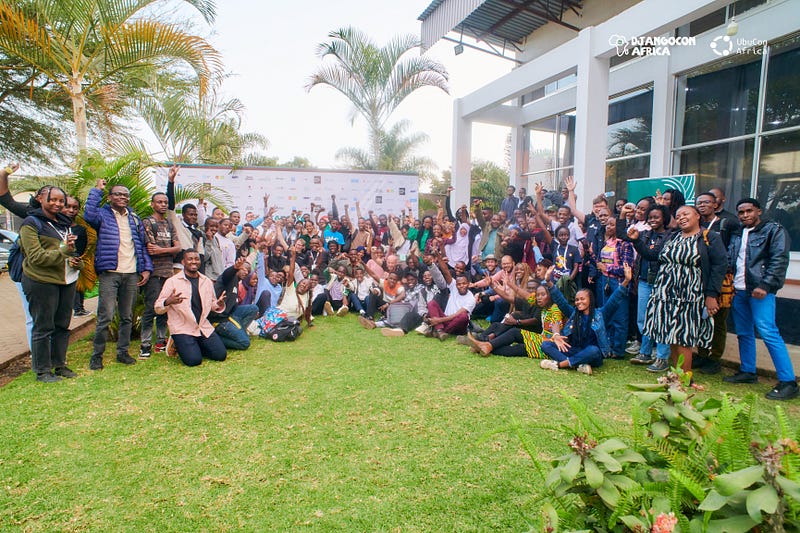
 DjangoCon Africa x UbuCon 2025 Group Shot!
“Come for the framework, stay for the community” is a common mantra heard within the Django community. This phrase has resonated with me since I returned home from the second DjangoCon Africa held in Arusha, Tanzania, especially after my experience at the first DjangoCon Africa in 2023. At the first conference, I was just an attendee, new to Django and unfamiliar with people in the community. Despite this, I attended the conference filled with excitement to learn, network, and soak up the experience! I had a fantastic time and chose to remain engaged with the community.
At the second DjangoCon Africa, I participated as a Django developer, an organiser, a speaker, and an open-source community leader. My increased involvement this time around has prompted me to reflect on the statement “come for the framework, stay for the community” from the perspectives of organisation, growth, and sustainability. I have divided this blog post into sections to recap my experience before offering my final thoughts on the African Django community.
Reflections on Talks and Keynotes
This year’s conference was a joint effort between DjangoCon and UbuCon Africa. As a conference organiser, I want to emphasise how invaluable the support from Canonical, especially from Daniele Procida, has been to the Django and Python communities in Africa. Hopefully, this partnership can continue to grow for years to come.
The conference talks were divided into two tracks: ‘DjangoCon’ and ‘UbuCon.’ Having all the talks on one stage was beneficial for both speakers and attendees; it provided everyone with a comprehensive conference experience and fostered a sense of connection throughout the week. One of my main gripes as an organiser was our inability to record the talks during the conference. Documenting this community’s efforts is crucial; otherwise, they may go unnoticed. This should be prioritised for the next one, but I assure you, we had some truly outstanding speakers and presentations throughout the event.
This year’s keynote speakers were Sarah Abderemane from France, Lidya Tilahun from Ethiopia, and Tim Schilling from the USA. Sarah discussed how her initial contribution to Django led to her current position as vice president of the Django Software Foundation. Her talk highlighted the serendipitous nature of involvement in open source projects and aimed to inspire many of the attendees, most of whom were students, to explore their own paths in open source work.
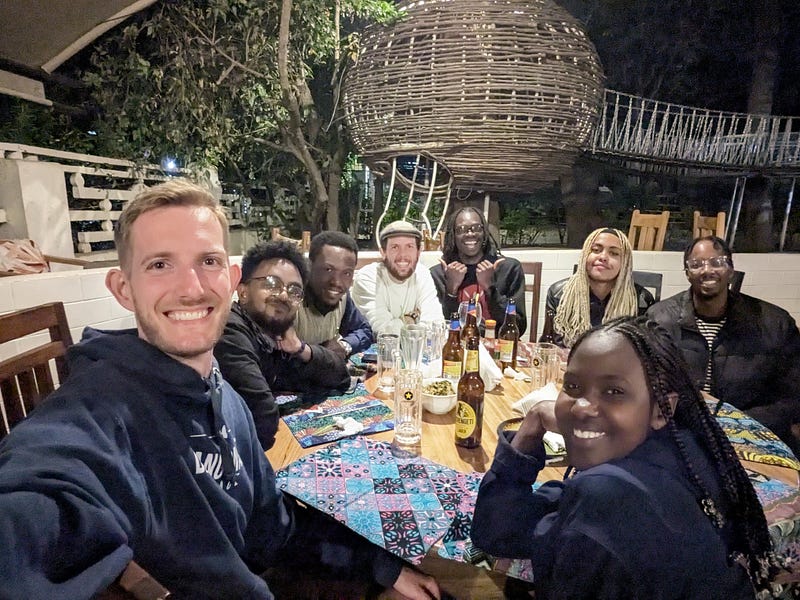 Dinner Selfie in Arusha — I Really Enjoyed the Food on This Trip!
Tim’s presentation covered various ways to contribute to the Django community, including coding, documentation, and simply attending or organising local Django events. He pointed out the lack of Django contributors from the African continent and committed himself to “onboarding” attendees into the Django ecosystem. By sharing his experiences, he acted like a tour guide, demonstrating the diverse opportunities available for finding a place within the Django community.
I met Lidya at the first DjangoCon Africa, and over the years, I have seen her take on larger leadership roles within the Django community, both in Africa and internationally. I’ve had many insightful conversations with her about the current state and future of the Django community on the continent, so I was eager to see the direction she would take in her keynote. Lidya shared her personal journey of becoming a community leader in Ethiopia and the various larger roles she has held. She aimed to convey the realities of being part of a community, including the highs, lows, conflicts, and uncertainties one might face. Her talk felt like a call to action, encouraging attendees to get involved, acknowledge the challenges they may encounter, and understand that navigating these obstacles is part of the journey and where personal growth occurs.
Not to sound like a broken record, but it truly is unfortunate that these talks were not recorded. They would have been valuable to revisit and share with those unable to attend the conference. I highly recommend reaching out to these speakers individually for a conversation; they are all great conversationalists!
Reflections on My Talks and Sprints
Giving my talk at this year’s conference was a full-circle moment for me. At the first DjangoCon Africa, I delivered a lightning talk, a voluntary five minute presentation, on a passion project I created called NoseBleedSection. Although the project wasn’t finished at that time, I provided a quick demo of its functionality and announced my intention to make it an open-source project, which you can read about here!
Two years later, I gave my talk on that same project, which has evolved into a completed open-source initiative called ShotGeek, a web application built in Django for tracking and comparing statistics for both current and retired NBA players. My talk focused on the steps one can take to build a passion project and foster an open-source community around it. I may go into more detail about the talk in a later blog post, but I’m pleased to report that the attendees found the topic meaningful and provided me with valuable questions and feedback afterwards.
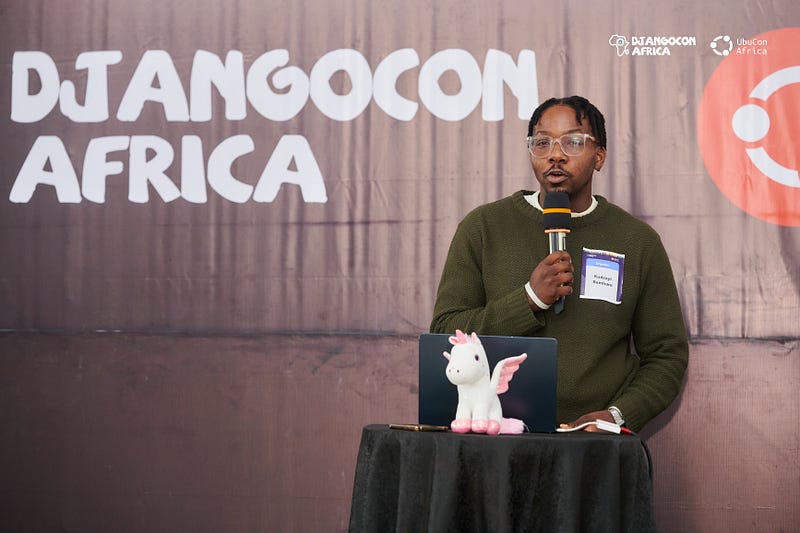 Me Presenting With The Django Unicorn For Moral Support!
It continually surprises me how similar our life experiences can be. Never hesitate to share your story and your passions; there will always be someone who finds your narrative resonates with them.
I also led sprints at this year’s conference. I have always enjoyed participating in sprints! There’s something about a room full of developers working on issues while snacking on junk food and fueled by caffeine that feels just right. Tim and Sarah led sprints for anyone looking to work on Django, and I was there with my “little project that could” — ShotGeek! I’m happy to report that the enthusiasm for ShotGeek carried over into the sprints, and I collaborated with some great people to merge pull requests and create new issues. A special shout-out to all the new ShotGeek contributors:
Finally, I also gave a lightning talk! My presentation was on “Vibe Check,” an open-source music playlist that is available for contributions on my website — feel free to contribute! Hilariously, my website crashed when everyone scanned the QR code and started making their contributions simultaneously! On the plus side, this led to an interesting discussion about the inner workings of database connections and prompted a mini debugging session — good stuff!
Reflections on the African Django Community
We were fortunate to have Thibaud Colas, the current president of the Django Software Foundation, present at the conference. Thibaud was phenomenal throughout the event; he attended multiple organiser meetings and was always ready and willing to lend a hand with various tasks during the conference. I truly appreciated his presence, along with that of other international guests. The Django community is diverse and multifaceted, and it’s important to highlight this aspect as much as possible at our conferences. Having attendees who travelled from afar contributes significantly to this goal so thanks again to everyone!
Overall, DjangoCon Africa was a success and an enjoyable conference experience. We did, however, face a few challenges while organising it. One of the primary challenges this year was funding. Several factors, including the current geopolitical climate, lack of local support, and our inability to find innovative ways to raise money, all played a role.
Another challenge I want to address relates to the message I opened my blog post with: “Come for the framework, stay for the community.” After the first DjangoCon Africa, it felt like we had discovered something truly special within the African community — a strong buzz and excitement surrounded the event. The excitement felt less intense this year, possibly due to the year-long break between conferences, perhaps our communication could have been better, or maybe it is the general state of the world which contributed to a decline in enthusiasm. Many attendees from the first conference did not return, including some organisers. This is not to criticise anyone who felt they needed a break or who lost interest — we must all do what we feel is best for ourselves. Still, it should be a cause for concern and introspection for anyone invested in the sustainability and growth of the Django community in Africa.
DjangoCon Africa is for the community and by the community. A continent with 54 sovereign states, along with support from a global community, can undoubtedly overcome these challenges. There is work to be done, and I see that as a positive opportunity for growth.
Thank you to all the organisers, speakers and attendees who helped create meaningful memories and experiences for the community! This community is worth staying for — I look forward to the next one!