Alright, let’s dig in — both literally and metaphorically. When you look at my plant-filled apartment, you might think, “Wow, this guy’s got a lot going on,” and you’d be right. For those immersed in either digital or horticultural worlds (or in my case, both) there is a surprising degree of overlap between the digital and the botanical. Whether you’re picking design tokens for a useful typography system or ensuring that your anthurium crystallinum doesn’t get crispy, both realms demand a similar cocktail of patience, precision, and, well, a penchant for nerdy details.
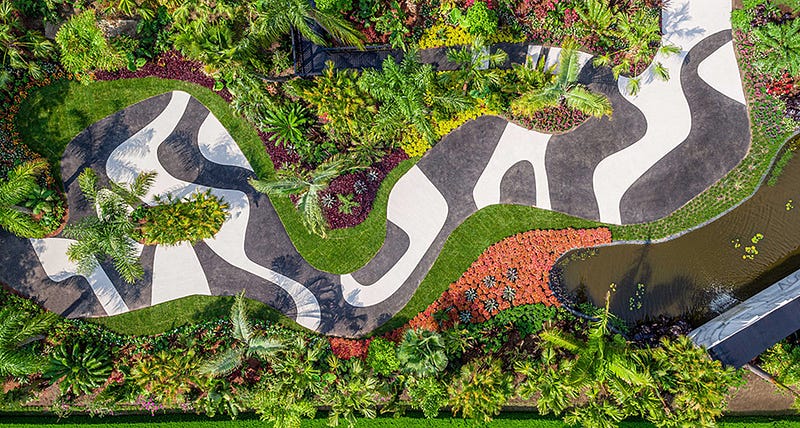 A garden designed by Roberto Burle Marx
Think about the work of people like Roberto Burle Marx, a landscape architect who blurred the lines between horticulture and art. He used plants to create beautiful spaces that are almost as beautiful to view from above as they are to experience in situ, so he’s a prime example of how the two disciplines can overlap in fascinating ways.
Once you spend enough time in either of these domains, you also start seeing a world that feels like a secret place that most others don’t experience. I’ll admit that I scrutinize a restaurant’s choice in foliage a little more than I should — what plants they have, where they are, and whether they look healthy. Similarly, I can’t help but notice whether any care has been taken with the menu’s typography and the interior design decisions. I fully recognize how ridiculous this is, but I still find myself having to resist those details from coloring my overall experience at a place that just wants to give me a tasty meal.
Doing > Learning
Both in my design career and in plant care, I’ve come to understand that book smarts only get you so far. True understanding is a battlefield of dead plants and deprecated code. Observation and iteration are your best friends. Your alocasia will drop leaves for countless reasons, and debugging why a React component has so many unnecessary renders can be equally as finicky. If you’re a beginner to either, just make sure you learn to walk before you try to run. For example: sticking to beginner-friendly plants like ZZs and pothos, or starting your UI journey with designing and building a simple to-do list app.
They’re both technical disciplines
Both horticulture and design can be scientific as much as they’re artistic. You’ve got to understand varying light cycles, nutrient levels, and the humidity needs for your plants different care needs. Likewise, design isn’t just about creating a visually pleasing layout; it’s about functional UX, accessibility, and performance. Each field asks you to balance aesthetics with practical concerns. Red and blue LED plant lights might be excellent for growth but could transform the vibe of your living room from “cozy home” to “sketchy nightclub bathroom queue”.
In both worlds, attention to detail is not just optional, it’s the name of the game. I can’t tell you how many times a subtle CSS oversight has snowballed into a disruptive and experience-breaking bug. Similarly, if you wait just one day too long to water your fragile calathea, she’ll let you know by curling up, getting crispy, and dropping her sad foliage.
The selection of the appropriate environment is another parallel. The same care taken in placing a UI element in its most effective context mirrors the intricate positioning of plants with similar light and water requirements. The harmony of design, in essence, is a universal principle.
Get lost in your gardens
A design system, like a garden, is intrinsically linked with the element of continuous improvement — is never truly finished. There’s a persistent cycle of pruning, whether it’s refactoring code or literally cutting dead leaves. You’re constantly tweaking, optimizing, and debugging. The sudden demise of a fancy begonia might demand a soil autopsy, much like a bug in production code warrants a post-mortem. And when something finally works—whether it’s a new shoot on your monstera or a successfully deployed feature—the satisfaction is immense.
I often view my work as a series of gardens. Each codebase, each design system is like a plot of land that requires consistent care. Tools, whether it’s a smart IDE for writing TypeScript or a light meter in horticulture, can be critical in your success. It’s all about sustainability and iterative improvements, like using slow-release fertilizers for your plants or automating repetitive tasks in your design and engineering workflows.
It’s not all sunshine
Both domains are fraught with pitfalls. For one, there are ethical considerations we face in both worlds. In the world of plants, the questions range from whether your specimen was ethically sourced to the carbon footprint of importing plans and wasting plastic on nursery pots. Likewise, when designing and building a product, you’ve got to consider if you’re designing something that’s actually in the user’s interest or if you’re just optimizing for company profit at the cost of users’ well-being.
Both worlds are also plagued by snobbish opinions and unsolicited advice. For every person insisting that you bottom water every plant, there’s another who says that CSS is fundamentally broken. How you navigate these ecosystems of mixed, often strong opinions is another skill set altogether.
Then there is the ever-present trap of comparing yourself to others. While Instagram is great for discovering new species or design ideas, it’s also a wellspring of self-doubt. Those perfectly curated photos of rare plants in mid-century modern living rooms? Those are the equivalent of seeing a design system showcased by a team of 50 when you’re working with a tight-knit crew of 10 or less. Comparison will always be the thief of joy.
It’s all worth it to me
Interacting with plants offers beauty, comfort, homecoming, and grounding. It may heal that which is broken. — DeJong, 2021, p. 25
So why bother with all this? For me, the sanctuary of a well-tended living room filled with lush greenery balances the demanding, fast-paced nature of my work. It’s more than just a break from the screen; it’s a connection to a different sort of creative energy. The therapeutic rhythms of watering, feeding, and simply watching something grow can reset my mental space. I constantly find myself wandering over to my little greenhouse cabinet during the workday when I’m feeling stuck, frustrated, or just not productive. Trust me, nothing says ‘mindfulness’ like the slow unfurling of a new leaf or fussing with a component until it looks and behaves just right.
I’m not evangelizing for every UI/UX designer to convert their IKEA cabinets to mini greenhouses, or for horticulturists to start building an app. Does growing plants make me a better designer? Probably not, but that’s not why I do it. I do it because it brings me joy and because, in some abstract but deeply felt way, both activities tap into the same well of satisfaction and challenge. So, whether you’re obsessed with making digital experiences delightful or you just love seeing that new leaf unfurl, you do you.
So go ahead, wrangle that gnarly legacy component or that diva anthurium. After all, in their own way, each is a garden waiting for your particular brand of love and attention.